Quibi, the short-form mobile video app, raised $1.75 billion in venture funding before its launch in April. Just over six months later, it’s shutting down.
In an open letter to employees and investors posted to Medium on Wednesday evening, cofounders Jeffrey Katzenberg (former DreamWorks Animation CEO) and Meg Whitman (former HP CEO) wrote, “It is with an incredibly heavy heart that today we are announcing that we are winding down the business and looking to sell its content and technology assets. Quibi was a big idea and there was no one who wanted to make a success of it more than we did. Our failure was not for lack of trying; we’ve considered and exhausted every option available to us.”
Quibi had investments from Alibaba, AT&T’s WarnerMedia, Comcast’s NBCUniversal, Disney, ViacomCBS, MGM, and Sony. It had a glitzy distribution partnership with T-Mobile. It had shows starring big-name talent like Chrissy Teigen, Jennifer Lopez, Reese Witherspoon, Liam Hemsworth, Tyra Banks, Joe Jonas, Chance the Rapper, Demi Lovato, and Andy Samberg.
So, why did Quibi fail so spectacularly?
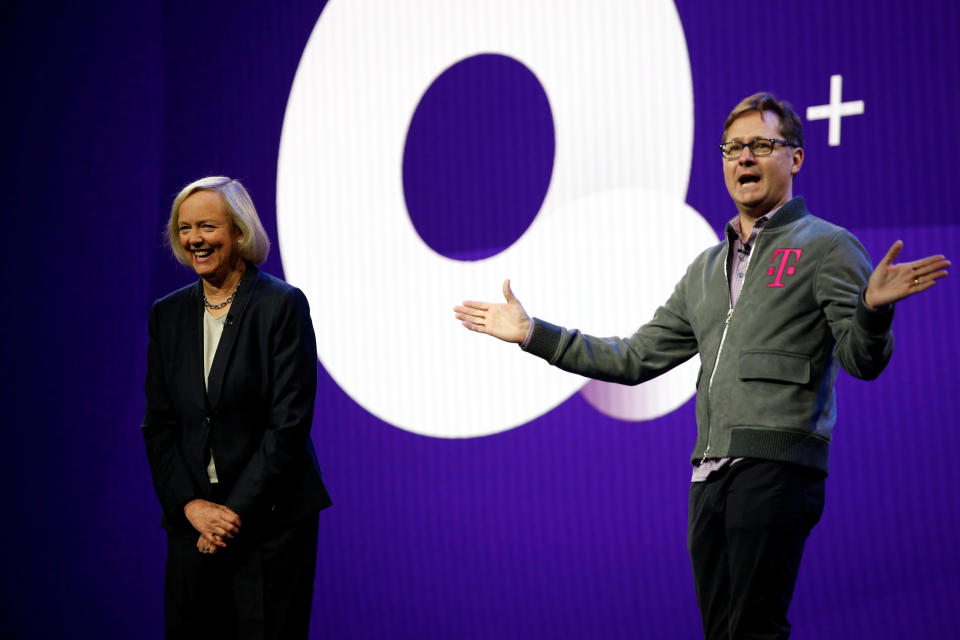
Mike Sievert, President and COO at T-Mobile, and Quibi CEO Meg Whitman talk about the partnership between Quibi and T-Mobile during a Quibi keynote address at the 2020 CES in Las Vegas, Nevada, U.S., January 8, 2020. REUTERS/Steve Marcus
Launched during the pandemic
The premise of Quibi (short for “quick bites”) was original shows with episodes shorter than 10 minutes that people could watch on the go, on their phones. The company’s television advertising before launch put that pitch in a humorous context: a getaway car driver watching a Quibi video while his friends rob a bank; a man stuck in quicksand watching a Quibi video while he sinks.
But the app launched on April 6, at the height of U.S. lockdown during the COVID-19 pandemic. During lockdown, people were not on the go, riding public transit, or waiting for friends to arrive, or any of the other scenarios in which, prior to the pandemic, people might have wanted to be entertained by their phones for 10 minutes. Instead, people were at home, watching shows on fullscreen televisions. They were watching hour-long shows like “Tiger King” on Netflix.
Quibi did not even launch with an option to watch on your television.
The app saw 1.7 million (free) downloads in its first week, but then downloads dropped dramatically. After just 10 days, the app had fallen out of the top 70 free apps in the iOS App Store.
The streaming space is extremely crowded, and got even more crowded right around the time Quibi came out of the starting gate. Disney launched Disney+ in November and it has been extremely successful, garnering 60.5 million paying subscribers in its first nine months. NBCUniversal soft launched Peacock in April for Comcast customers, then launched it nationally in July; it reportedly had 15 million subscribers as of September. HBO launched HBO Max in May, and had lured 4.1 million paying subscribers as of July.
These services have deep-pocketed media conglomerates backing them and came with massive content libraries at launch. Quibi had no lack of funds, but perhaps the show lineup simply wasn’t enticing to people.
Or its entire premise of short-form television was faulty, and would have been unsuccessful no matter when it launched.
That’s a likelihood Katzenberg and Whitman finally acknowledge now, at the end of the road, in the goodbye letter: “Quibi is not succeeding. Likely for one of two reasons: because the idea itself wasn’t strong enough to justify a standalone streaming service or because of our timing. Unfortunately, we will never know, but we suspect it’s been a combination of the two.”
Hubris
There was a fair amount of hubris and grandiosity to the pitch Katzenberg and Whitman made during their media blitz in the months before Quibi launched.
At a Fortune conference in July 2019, Whitman declared, “We’re actually offering way more than just new content. We’re trying to bring together the best of Silicon Valley and Hollywood in a way that has not been done before.”
Katzenberg added, “What we’re setting out to do—it’s obviously a high bar, ambitious—is to create a new form of storytelling, and our mission statement here is to tell two-hour movies in chapters.”
It turned out people weren’t clamoring for that.
Big spending
Quibi had $1.75 billion in funding to blow on content and marketing, but still may have overspent on individual projects or talent. In February, Quibi shelled out $5.6 million to run a 30-second Super Bowl ad; the ad ended up among the worst-rated with viewers.
Then the app faced backlash almost immediately after launch for the hefty sums it paid some stars, including $6 million to Reese Witherspoon to narrate a nature program; Witherspoon’s husband, former CAA agent Jim Toth, was Quibi’s head of content acquisitions and talent.
If all of its stumbles weren’t damaging enough, Quibi also got hit with a patent lawsuit from video startup Eko, bankrolled by hedge fund Elliott Management, over one of Quibi’s most praised features: automatic re-formatting of video depending on the orientation of the viewer’s phone.
Eko said that Quibi stole the tech. In July, a U.S. District Judge dismissed three of Eko’s nine claims against Quibi, including one that claims Katzenberg entered into an “implied contract” with Eko, but allowed the patent infringement suit to move forward.
What next?
According to The Information, Quibi has $350 million left to return to shareholders. That means it blew through $1.4 billion in six months. Katzenberg reportedly shopped a Quibi acquisition to NBCUniversal and Facebook, but both passed.
Still, its shows or other I.P. could end up sold off to larger streaming giants piecemeal. So don’t assume you won’t see “Chrissy’s Court” on Netflix soon.
—
Daniel Roberts is an editor-at-large at Yahoo Finance and closely covers the streaming wars. Follow him on Twitter at @readDanwrite.